
KinderKronicle Preview:
Nurturing Stage
Month 1

Welcome to Motherhood
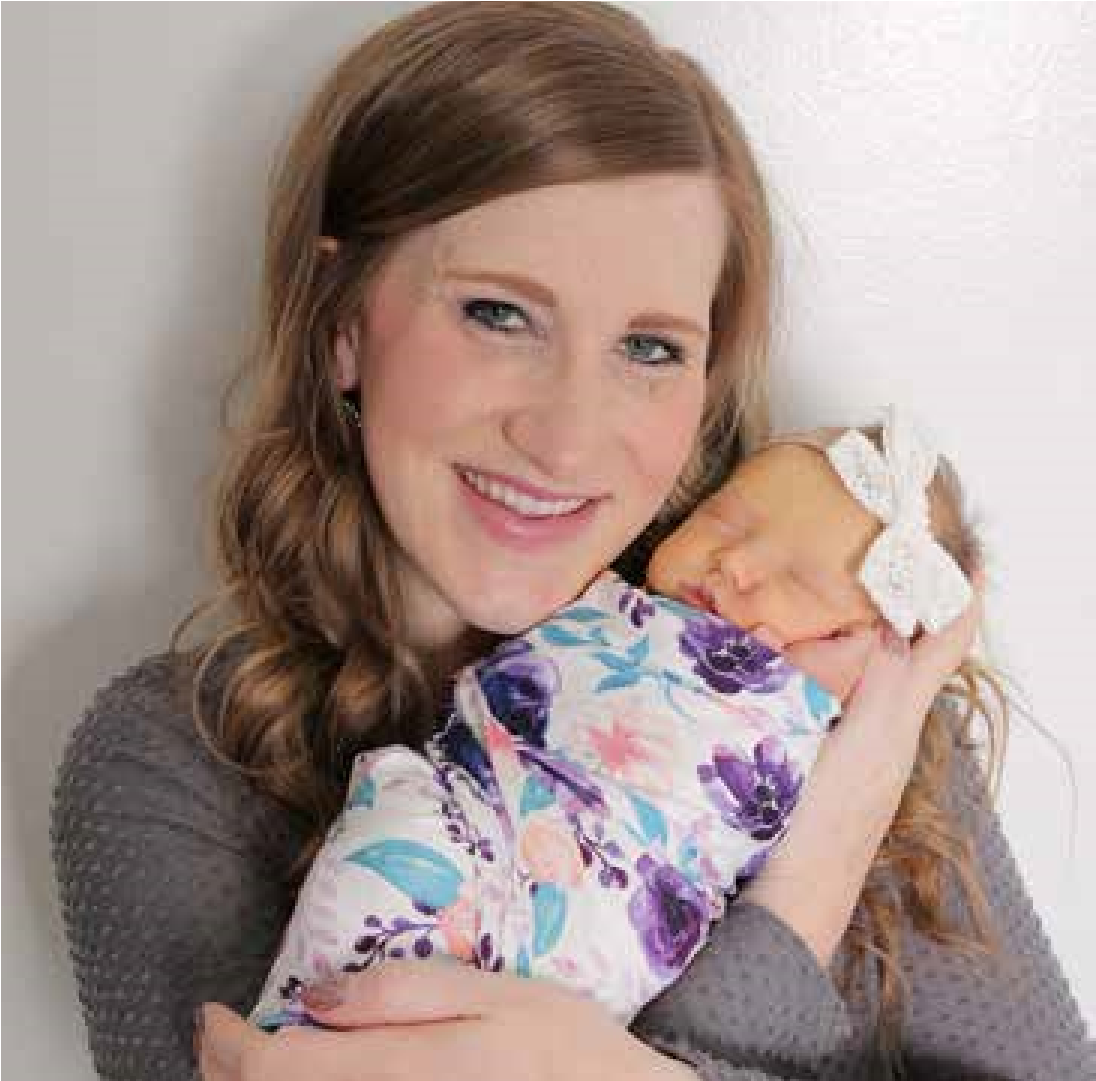
Becoming a mother is a profound and life-altering experience. The first month with your newborn is a whirlwind of emotions, challenges, and beautiful moments that will forever change you.
From the moment you first lay eyes on your baby, an overwhelming outpouring of love and protection floods your heart. This tiny human, so perfect and yet so fragile, instantly becomes the center of your universe. This intense bond forms the foundation of your new relationship. It’s completely normal to feel mixed emotions—your world has changed overnight!
Our Begin with the Children Parenting Program is designed to support you step by step and provide reassurance to all new moms navigating this extraordinary journey. You can do this!
Read More
-
Your Feelings and Emotions
- Love and Joy: Holding your baby, watching their tiny fingers grasp yours, and seeing their first smile are moments of pure bliss that fill your heart to the brim with joy. Your thoughts turn to years in the future, thinking about how your actions today might develop your baby’s little mind and body. You wonder, what do’s and don’ts should you follow to help your precious baby have a happy and fruitful life?
- Worry and Anxiety: Concerns about your baby’s health, feeding, and sleeping patterns can be overwhelming, creating a knot of anxiety in your stomach. For a new mom, excitement and stress come in these early days as decisions are made with the hope they are the best for your little one.
- Exhaustion: The physical and emotional demands of caring for a newborn can be so draining that at times you feel like you’re running on fumes.
- Pride and Fulfillment: Watching your baby grow and knowing you are nurturing them provides immense satisfaction; a pride so deep it brings tears to your eyes.
- Delayed Bonding: Some mothers, particularly if they experienced a traumatic birthing experience, may not immediately feel this new mother exhilaration. Not to worry. If the bonding connection isn’t as you expected during the magic moment following birth, it will come in time as you get to know each other.
The Joy of Bonding
Amidst the sleepless nights and busy days, there are quiet, precious moments that make it all worthwhile. Rocking or feeding your baby can be a time of deep connection, a moment where the world stands still, and it’s just you and your baby. Many moms find comfort in humming or singing lullabies. Here’s a favorite for many mothers: Baby Mine | Dumbo (2019)
These moments of bonding are priceless and create a strong emotional connection with your baby. The feeling of your baby nestled against you, feeling their heartbeat and their tiny breaths matching yours, is a sensation of pure love and serenity.
Motherhood brings a sense of fulfillment that is unparalleled. That fulfillment is also shared by the father. Watching your baby grow, reach milestones, and develop their unique personality fills you with pride and exhilaration. Each day brings new discoveries and joys that enrich your life in ways you never imagined. The first time your baby recognizes your voice, their first smile, their first coo—all these moments fill your heart with delight and a sense of accomplishment.
Love These First-month Milestones
- Raising their hands to their face.
- Moving their head from side to side.
- Grasping their fists tightly.
- Being alerted to sounds.
- Recognizing faces.
- Eating every three to four hours.
Copyright © 2008-2025 World Peace Parents Foundation. All Rights Reserved; Trademarks: World Peace Parents®; Begin with the Children®; Putting Family First®; Empower the Family®, KinderKronicle® Family Hour®; and A Chat with your Baby® are registered with the U.S. Patent and Trademark Office.
Challenges and Frustrations
Along with joy and happiness of birth comes fatigue and adversity. It’s important to remember that this newborn phase is temporary. Each sleepless night and tiring day are steps toward building a stronger bond with your baby.
Despite the joy, there are inevitable challenges and frustrations. The nights when your baby cries inconsolably can feel endless, and the frustration may bring you to tears. It’s important to remember these challenges are common, and seeking help from healthcare professionals or support groups can be beneficial. Here are some more common difficulties that will test your patience and resolve:
Read More

- Feeding Issues: Whether to breastfeed or bottle-feed? Ensuring your baby is well-fed can be stressful, especially when they struggle to latch or refuse the bottle.
- Sleep Deprivation: Lack of sleep affects your mood and energy levels, making you feel like a shadow of your former self.
- Colic: Persistent crying can be distressing for both you and your baby, leading to feelings of helplessness.
- Take care of yourself: During this first month of motherhood, try schedule a few minutes daily to have your husband or a trusted helper look after the baby so you can have some personal time just for you. Some mothers feel a loss of autonomy because all activities and attention are focused on the baby. It may take some quiet time to think through your new identity as a new mom, or now a mother of two, or three, etc. A new baby does change your identity.
Reach out for help. Here are some resource ideas:
- Family: For moms living with the baby’s father and surrounded by a functioning extended family, here are some ideas:
- The baby’s father is living with the same challenges as you are. Ask him to take turns in helping with a crying fussing baby.
- Reach out to your own mother or close family member.
- Friends: Female friends usually love to help and share the wonder of a new baby. Invite them to help.
- Faith Organizations: Religious congregations usually celebrate motherhood and a new baby. Reach out to them.
- Professional Help: Another great resource is your OB/GYN and/or your baby’s Pediatrician. If it is a feeding challenge, a good resource is a lactation nurse or consultant.
|
The Closure of Month 1
The first month of motherhood is a journey filled with highs and lows. It’s a time of incredible change, but also a time of immense love and joy. Embrace the help of your support system and communicate openly with your husband. Take care of yourself. Remember, every mom’s journey is unique, and it’s okay to have a wide range of emotions. Your role of giving life to a new human being is an amazing miracle. Whether it’s your first or fourth child, a new baby is a wonder; beautiful, challenging, and rewarding for mom and dad in their role of parenthood. Birth is a moment to celebrate.
|
Dad, Family and Friend Help
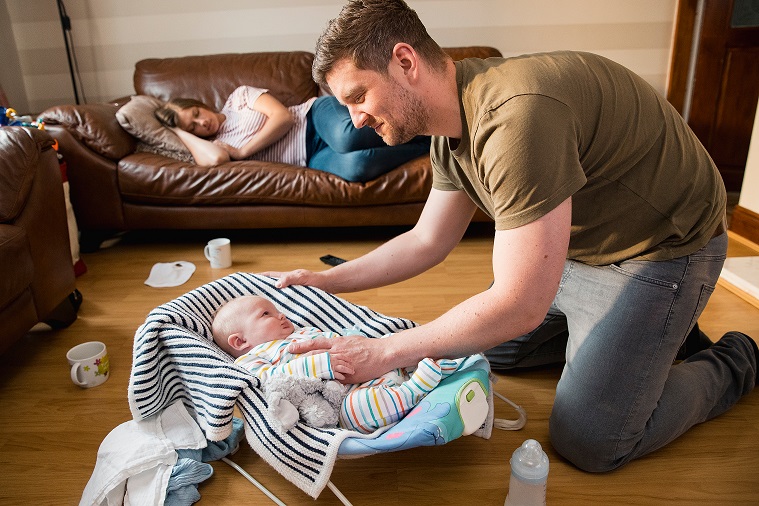
A support system is crucial, especially for mom during the first month or two.
Remember, Dad is a partner in caring for this new life, and his contribution to household and baby chores will make a BIG difference. Welcome help from dad, family members, and friends. For example:
- Cooking and Cleaning: Simple tasks like preparing meals or tidying up can lighten your load, allowing you to focus on your baby.
- Baby Care: It’s okay to let dad and other family members and friends show their love by accepting their help with baby care and household chores.
- Emotional Support: Having someone to talk to about your feelings and experiences is essential. Sometimes, just a listening ear can be incredibly comforting. Also, knowing you’re not alone can lift some of the weight off your shoulders.
- Dad’s Help: Greet visitors, make sure none of them are sick, and have them wash their hands before holding the baby. Keep an eye on mom to make sure she is not getting too tired. You may have to cut some of the family/friend visits a bit shorter.
Read More

Mom, Stay Connected to Dad
Amidst the focus on your newborn, it’s easy to overlook your relationship with your baby’s father. Connecting with your husband is crucial for maintaining a strong family unit. Schedule some quiet time together, even if it’s just a few minutes after the baby is asleep. If possible, eat your daily meals together, particularly dinner. Cuddle up, share your thoughts, and remind each other of your love. Communication and teamwork are key to navigating this new chapter of life together. The journey of parenthood is one you share, and nurturing your relationship strengthens the foundation of your family.
Tips for Staying Connected
- Communicate Openly: Share your feelings and listen to your husband’s perspective. Understanding each other’s emotions fosters closeness.
- Spend Quality Time: Find small moments to connect, like watching a movie or enjoying a quiet dinner. These moments can rekindle romance and partnership.
- Support Each Other: Acknowledge each other’s efforts and offer encouragement. Knowing you have each other’s backs makes the journey smoother.

Making Room for Baby
“Making the decision to have a child—it’s momentous. It is to decide forever to have your heart go walking around outside your body.” Elizabeth Stone
Babies are a life changer. When your baby is born, immediately you need to relate to your spouse as both your partner and as your co-parent. You also begin to learn how you yourself parent in practice, as well as in theory. And, you have to make room for this new member of your household: your baby. He or she comes with his or her own personality, demands, and leaky plumbing. Even more intimidating, you’re learning to adjust to all these things while being sleep deprived.
It’s important to remember that it’s okay to “let go of the familiar in order to make room for something unknown”1 as you learn how to relate to your baby—and to yourself and your spouse in a new way.
Read More
One day, your baby may like to cuddle to sleep, and the next day your baby may need to be left alone before he or she can settle down. Don’t be afraid to try different strategies to accomplish your goals.
Dad, it’s important during these first few weeks to rock and cuddle your new babe. If you can’t sing, hum a soft lullaby. Baby likes to hear your deep voice, softly spoken. Hold your babe close so he or she can hear your heartbeat.
Don’t worry if your relationship with your spouse is a bit different at first as you begin to really make room for your child in your lives. During these first few weeks your baby is saying, “Dad, the most important thing in Mom’s life right now is me. Sorry you have to play second fiddle for a while. But that’s just the way it is.”
Pay attention to your baby’s mother. The hormonal changes that come with pregnancy and infancy are significant, especially when a woman is also recovering physically and operating on little sleep. If your spouse is suffering from the “baby blues” for more than a week or so, she may be experiencing post-partum depression and may need professional support.
Together, Dad and Mom, enjoy the wonder, power, and fulfillment of bringing a new life into the world. Remember, KinderKronicle will be with you once a month with parenting ideas and discussions.
- Davis, Laura, and Janis Keyser. Becoming The Parent You Want To Be. New York; Broadway Books, 1997.

Copyright © 2008-2022 All Rights Reserved World Peace Parents Foundation.
Parenting is Generational
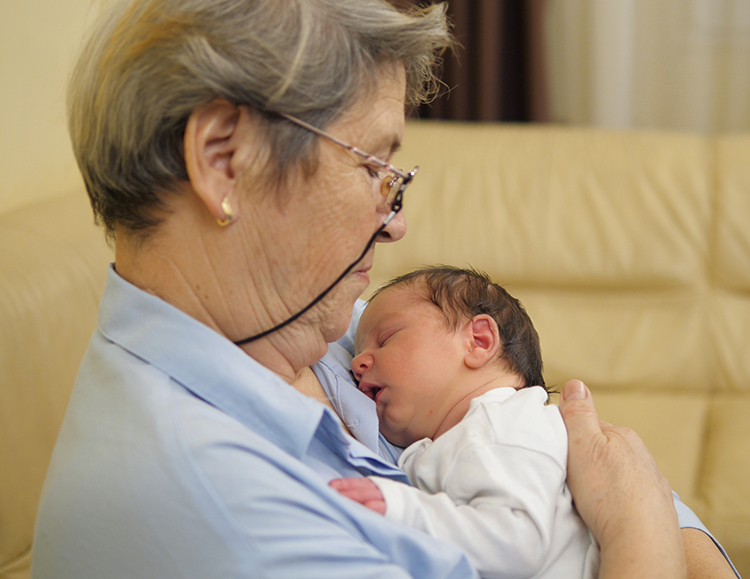
The birth of a baby brings feelings of wonderment and joy to Mom and Dad. That’s true today, yesterday, and throughout millennia. Regardless of one’s belief or faith, birth is almost always celebrated as a sacred moment.
As the founders of the Begin with the Children Parenting Program, we welcome you to Parenthood—be it your first or fourth child. Over the years, we welcomed eight children and 28 grandchildren into our family. We are Kesler’s, Vibert and Marilyn.
Parenthood is both a science and an art. As a science, there are studies, research, and principles. However, feelings, emotions, viewpoints, and opinions are examples of the art elements of Parenthood. Both are needed and both are skills that can be learned.
Read More
As the developers and sponsors of the Begin with the Children Parenting Program, careful thought has been given to two important issues:
First, we believe there is an important and useful balance between generational parenting and today’s technology infused parenting, and
Second, parenting is largely a learned discipline.
We, the Kesler’s, would be remiss if we did not inform you of three generational, centuries old, bedrock parenting principles. They are:
1. Love
2. Personal Responsibility
3. Teaching Virtue and Noble Values
These three parenting principles are common to the world’s major societies including Buddhism, Christianity, Hinduism, Islam, and Judaism—representing approximately 70% of the world’s population.
There are many generational parenting principles worthy of emphasis. These generational principles will be noted by cameo appearances primarily by the Kesler’s like the following:
 |
The generational principle of Love is a lifelong principle. |
Instilling Love is most important during the Nurturing Stage of Parenthood, namely, the prenatal months to approximately age 2-years. Love will be emphasized during the first two years of our Parenting Program.
We close this article with congratulations on the arrival of your precious baby.

Month 4

Parent Leadership
In Alice in Wonderland, Alice came to a fork in the road. As she stood there, wondering which way to go, she spotted a Cheshire Cat perched in a tree.
Alice: “Would you tell me please, which way I ought to go from here?”
The Cat: “That depends a good deal on where you want to get to!”
Alice: “I don’t much care where—–”
The Cat: “Then,” said he, “It doesn’t matter which way you go.” (1)
When you plan a trip, the first thing you do is decide where you are going. Otherwise, there isn’t a map in the world or GPS that can help you get where you want to go.
Your parenting journey is no different.
Read More
You need to know where you want to end up as a parent. Visualize the end of your parenting journey from the beginning. Otherwise, as the Cheshire Cat pointed out, it doesn’t matter which way you go.
Richard L. Evans, a former president of Rotary International and the writer and announcer of Music and the Spoken Word for 41 years, said,
“One reason for a child’s walking in wrong ways would be in his not knowing which way to walk. One reason for his going his own way would be if his parents did not unitedly know which way they want him to go. Agreement between parents on fundamentals, basic beliefs, is among the foremost essentials for a solid family, for the solid teaching of children.” (2)

When you know the way you want to go, it is much easier to get there.
Parents often have dreams of their child growing up to be a famous athlete, or president, or doctor, or a lawyer. These can be worthy aspirations, requiring careful planning and goal making, but character aspirations are even more important.
Raising Responsible Adults
To help shape the character and the type of person your child will become requires parental leadership. Parents must visualize what kind of adult they want their child to be—meaning the core character traits rather than particular career aspirations.

You need to ask yourself questions like,
- “What character traits do I want my child to live and exhibit as an adult?”
- “Do I want my child to develop virtues like being honest? The Golden Rule? Trustworthy? Respectful? Kind? Patriotic?”
- “Do I want my child to develop a good work ethic, and be responsible?”
- “Do I want my child to be a good father? Mother? Parent?”
Write down the goals and character traits you would like to help your child develop.
“Most parents want to be good parents and they want their children to became good adults.”
The Parent Leadership challenge: “How do I impart the lessons and values we as parents feel are important to your children? In the words of the Chesire Cat “you need to know where you are going.”
Yes, you need a plan.
The first component of your plan may be a surprise, and the longest, and the hardest to carry out. It is: As leaders of your family, you must live the character traits and goals you want your children to emulate and develop. To complement the goals selected for your children, you need to select goals for the parent you want to be!
The Catch 22
 |
Besides being a 2019 TV miniseries, a Catch-22
|
situation means you cannot do one thing until you do another thing, but you cannot do the second thing until you do the first thing.
In other words, to complement the goals selected for your children, you need to select goals for the kind of parent you want to be.
|
How do you impart lessons and values that you want your children to adopt? You must live them! “Do as I say, not as I do” doesn’t work. The fundamental truth of successful, productive parenting is to live the character traits, lessons, and goals you set for your children. You have to live your lessons and also teach and share them with your children. Richard L. Evans wisely points out, “the idea that we can leave entirely to children the vital choices of life is unsafe. Leaving such decisions to trial and error is unsafe.” (3) |
KinderKronicle Months 3 and 4 are important as they introduce you to basic and important parenting principles, namely Family Relationships and Parent Leadership. Nearly every month KinderKronicle will have an Article on one or the other these two principles.
Copyright © 2008-2025 World Peace Parents Foundation. All Rights Reserved; Trademarks: World Peace Parents®; Begin with the Children®; Putting Family First®; Empower the Family®, KinderKronicle® Family Hour®; and A Chat with your Baby® are registered with the U.S. Patent and Trademark Office.

Parenting is a Learned Skill
For many parents, particularly newly minted parents with their first baby, Parent Leadership is more than a subject for conversation—it is reality. For millennia, new fathers and mothers have had to cope with this reality. The good news is that parenting is a learned skill! You don’t feel like you have it down yet? Not to worry, it will come.
As a learned skill, the World Peace Parents Foundation believes ALL parents have the potential to be good, productive parents. Learning any skill takes time and effort.
Knowing that parents with a baby, toddlers, and/or young children are very busy, the Foundation’s Begin with the Children Parenting Program is structured to minimize your time and effort in receiving and using parenting ideas, information, and principles. Your next issue of KinderKronicle Month 5 will discuss how to use our Parenting Program to maximize your time and effort.
Read More
Parenting is like a River
Consider the nature and characteristics of the mighty Mississippi River. From its source at a small Northern Minnesota glacial lake (Lake Itasca), it flows 2,340 miles south through the middle of America to the Gulf of Mexico.
As its waters flow south, the Mississippi is strengthened along the way by small streams and big rivers. These additional sources of water increase the volume of water in the river, making it the biggest source of fresh water in America.
The source of parenting skills usually begins in the family. Like small stream that becomes the Mississippi River, parents of newborns and young children are strengthened by additional parenting resources. They consult with other family members and friends, buy books, watch videos, and search the internet in their efforts to add to and strengthen their parenting skills.
During the last half of the 20th century and continued into the 21st century, hundreds of research projects, studies, and reports on parenting and family life were undertaken. As a result, today there is an overwhelming amount of parenting resources available.
Amazon lists more than 300 books and publications on the subject. Facebook, Instagram, podcasts, and blogs—to summarize the internet, are loaded with parenting and family life sites. The question is, how do young parents absorb this river of information? How does a parent know which sources of parenting information to trust?
| We had our first child in 1960 and immediately purchased Dr. Benjamin Spock’s book titled The Common Sense Book of Baby and Child Card. |
First published in 1946, the book discouraged strictness in rearing children. Critics say the book led to overindulgence and permissiveness of young people. While the book sold an astounding 50 million copies, many claim it gave rise to the “me-me-me” society leaving young people ill-prepared for the challenges of the real world. When buying a book on rearing children, ask yourself, ‘”does this book address the parenting issues I need now?” Also, research the author and his or her background.
Our Parenting Program is Unique
Parenting information and materials available in today’s society flows through hundreds of diverse communication channels. The challenge for parents today? Which channel(s) can a parent trust? I’m so busy, where can I get information tailored to parenting a 4-month old baby? Of the many diverse channels of communication, which is best for me?
The Foundation regards itself as an educational institution. It offers a course of study similar to what you receive in high school, college, university, or a trade school. A high school course of study on American History may have started with the Magna Carta signed in 1215 and progressed to the last presidential election. A course on plumbing may begin with the purpose of plumbing being a way to convey fluids from one point to another.
As with any education course, you enrolled in our Begin with the Children (BWC) Parenting Program to begin your course of study on learning parenting as a skill. Your course of study is patterned after the six stages of parenthood. While a high school course of study may last for three months our BWC lasts for about 18 years! Our unique course of study starts with a lesson about the 1st trimester of pregnancy and ends with your child’s graduation from high school. Another unique feature of our program is that parents may enroll at any time along the way up to a child age 8.
YES, parenting is a learned skill. But we don’t dump 500 or 1000 pages of material on you all at once. You receive monthly lessons pertaining to parenting a child at a given age. For example, if you enrolled when you baby was five months old, your Month 5 lesson will be subjects involving the parenting of a five month old baby. If you enroll when your child is five years old, you will receive lessons pertaining to parenting a child age 5.
Thanks for being enrolled in our unique course of study.

The World Through My Eyes
Baby: Mom, Dad—you think you are overwhelmed by my coming into your life. From the perspective of being overwhelmed—you don’t know the half of it! To start, from my viewpoint everybody is big and tall.
Parent: You like to be at eye level?
Baby: Yes, I am overwhelmed at almost everything. Look at life from my perspective. I’m four months old and there’s so much more to my life than you realize. Life for me is a constant unknown adventure.
Parent: I hadn’t thought of it that way, but it sort of makes sense. It leads to a really big question in my mind: Where did you come from?
Baby: That is a big question that I cannot answer. Some say I was a spiritual being that lived before birth. Others say my spirit-being developed in the womb. Still others say I was something else—like an animal—before I was born.
Read More
Parent: Yeah, that’s a subject that the world’s best and smartest philosophers have grappled with for millennia.
Baby: Regardless, I’m undergoing a remarkable transformation, both physically and cognitively. I am growing like crazy. I’m developing new abilities. Everything is so new—its overwhelming. Its also frustrating, yet in many ways its wonderful.
Parent: I know you have a budding sense of curiosity about the world. Tell me more.
Baby: OK. You asked about it. Your understanding of me will help our relationship. Here is my current list of curiosities:
- My Physical Milestones and Growth: Physically, I’m becoming stronger and more coordinated every day. I’m trying to hold my head up with more stability. I push up during tummy time, and even start to roll over from my tummy to my back.These physical developments are exciting milestones leading to further mobility and exploration. You might notice that my grasp on your fingers is firmer. This is a sign of my developing motor skills and hand-eye coordination.
- Sensory Exploration and Awareness: My vision is improving. I can see objects and people more clearly. I can even track moving objects with my eyes. Bright colors and interesting shapes captivate my attention. I am more responsive to sounds and I turn my head towards voices and other noises.This means I am becoming more engaged with my surroundings. I am interested in the simplest interactions around me, and I’m interested in watching what is happening or listening to a lullaby. The world is a sensory wonderland for me.
- Social Interaction and Communication: I am beginning to participate in my family environment. When my parents or others smile, I smile in response to their smile, I coo when talked to, and I may even attempt to mimic facial expressions.These early forms of communication are crucial because they are the foundation for my later language development. The joy of shared moments, like a playful exchange of smiles or my coos responding to gentle conversation, a giggle if tickled, etc. all these experiences strengthen my bond with my parents.
- Cognitive Development and Curiosity: I know that during these early months of life my brain is being stimulated by love from Mom, Dad, and close family and friends. Intense curiosity drives me to explore and learn. I am beginning to understand cause and effect.My crying catches mom’s attention. I’ll end this conversation by noting that this is a big and sometimes scary world. Everything around me is new and strange. I have a lot more adjusting to do.
Parent: Yes, you have a lot to learn, but so do mom and dad. I’m still trying to absorb and understand your brain development during these early months. In Month 3 of your life we were shown the following image of your brain development:
 |
To summarize, during the early months of your baby’s life there is a lot more to parenting than holding, feeding, and changing diapers. |
There are three important key parenting ingredients at this age: interaction, interaction, and more interaction. Ideas for interaction include rocking, dancing, humming/singing, book reading or listening to classical music. Video and TV have a limited role—but it is not extended baby tending. Take your baby for walks and strolling. Take her shopping with you. Have him participate in as many of your activities as possible. A note from Vibert: To summarize, be creative with your interaction. As babies, I used to read the Wall Street Journal to my children.

The Joy of Motherhood
Caught up in the daily chores that come with a new baby? Overwhelmed with dirty diapers, hungry babies, and all that crying? Sometimes feeling confused and inadequate?
Don’t worry—it’s normal, it’s okay, and you are not alone! All new parents travel this path. Some say these feelings of inadequacy can help you to feel empathy for the struggles your child goes through. Just think of all the feelings your baby has. Totally new surroundings, a new body, and all those strange people.
Amidst the stress and perplexities of a new baby joining your family, there will be times when you will say to yourself: “Where’s the joy?”
The answer? It’s still there! It’s in that sweet grin that lights up your baby’s face when you come into the room. It’s those full-body wiggles when the baby hears your voice. And the exhilaration of those little giggles when you make funny sounds or faces at your baby. Then there is the reward of the peaceful cuddles you get while you gaze into your baby’s eyes.
Read More
| Karen Reivich, a research associate in the Positive Psychology Center at the University of Pennsylvania, points out, “Happiness is more than just a smiley feeling. It’s also feeling a connection to something larger than yourself. When people are in service to something bigger, they describe their lives as filled with meaning. It’s not the smiley face, but when it’s all over, you realize you’d do it again.”(1) |
The Bank of Life
| Motherhood is an investment for the future. |
Every diaper changed, every bout of crying soothed, every nursing session or bottle feeding, and every cuddle given is like putting a deposit in the Bank of Life.
Just like saving up financially for retirement, raising responsible children is an investment for future happiness and joy, as well as joy in the present.
Remember that being a mother is important and essential—without you, there would be no baby. You’ve already made a huge deposit in your Bank of Life. Return on your investment will include the wonder of your baby developing into a toddler (with all its questions), then a Kindergartener, a child followed on by being a youth, a teenager, and finally (hopefully) a responsible young woman or young man.
However, if you are struggling to find joy in motherhood, these tips may help: (2)
- The things you do to show your child love, to help her learn and grow in a safe and healthy environment, are what contribute to her becoming a responsible adult. As you rock your baby during those wee hours of the morning—daydream.When they finally fall asleep, look into that innocent, peaceful face—what will he become? Will he like football or would he rather play the violin? Will she prefer soccer to dance lessons? Such daydreaming brings peace and fulfillment to the soul.
- Does motherhood make you feel amazing all day, every day? No! All moms get stressed, frustrated, and tired. During these times, take a deep breath, see if you can do something to help improve your mood (a nap is always a good option, especially for sleep-deprived new moms), and try to look for the good.
- Savor the joyful moments—revel in that gummy smile, those chubby feet, that soft baby skin. Ponder what you love about being a mother.Enjoy the fun. Take the time to be silly with your baby. Make up stories about “Super Mom” and tell them to your baby as you perform your different tasks. Sing and dance with your baby. Laughs are the best!
| I’m the father of six girls and two boys. |
As babies and toddlers, the girls loved, loved to dance with me. I would pick them up and hum a tune or turn the tape/CD player on to some ballroom dance music.
My daughters would snuggle up and hold tight with those beautiful little arms and hands and for a few minutes, we would do the fox trot or waltz together. They loved it when we twirled around. They especially liked it when I dipped them down and back up.
The boys loved to dance as babies—but they soon grew out of it. Dad and mom, dance with your baby. Here is some fox-trot music for you to dance to.
Look for joy and happiness in everyday moments. The book Joy in Motherhood: 30 Days to Becoming a More Connected, Happy Mom, by Kirsten Reeder challenges readers to focus on one simple thing with their child each day for 30 days to bring joy into their parenting. Reeder’s Day 1’s challenge is to snuggle your child for 15 extra minutes. Another day’s challenge is to celebrate the wonder of infancy or childhood.
The idea is to find the joy that comes from motherhood through small, daily actions. When you feel joy, your baby will sense it and respond with her own joy. Deposit her joy in your Bank of Life.
Footnote:
- https://www.parenting.com/article/how-to-be-a-happier-mom
- Ibid.
We like that the Program is simple and easy to use. I also appreciate the direct teaching ideas of how to be an effective parent. It is great to get a reminder of the principles each month in KinderKronicle. I really appreciate the assistance I have been given as a parent.
Enroll in Begin with the Children
Parents expecting the birth of a child as well as parents of young children are welcome to enroll in our free monthly Begin with the Children program.
Enroll to receive the study course on our app


Enroll to receive the program via email